Revise a First Draft Without Fixing Everything at Once
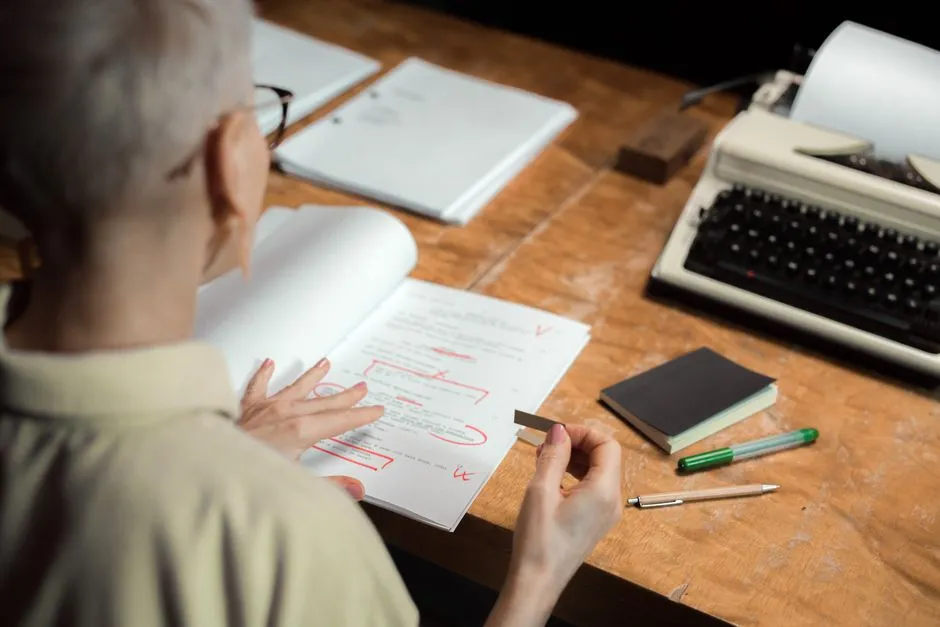
Revise the first draft by separating the problems
A first draft usually contains story problems, scene problems, sentence problems, and commas behaving like unsupervised toddlers. Trying to repair every layer at once makes revision slow and emotionally noisy. Work from large decisions toward small ones so you do not polish a paragraph that later leaves the book in a tasteful cardboard box.
The goal is not to make the draft “better” in the abstract. It is to make its intended effect clearer.
Let the draft cool enough to become readable
Take whatever distance your circumstances allow, then read in a format that feels different from drafting. Usually, read the ending before spending extensive time polishing the opening ten pages. Read the whole manuscript and collect observations.
Write a short diagnosis: what the book promises, whose story it is, what changes, and where your attention weakens.
Build a reverse outline
For each scene, record viewpoint, location, immediate goal, conflict, outcome, and new information. This outline describes the draft that exists, not the noble outline it ignored.
Look for repeated scenes, missing consequences, long gaps between important characters, and subplots that vanish. The developmental-editing comparison helps separate large structural work from later sentence-level correction.
Choose a revision hierarchy
List the few changes with the widest consequences. A weak central motivation may affect every scene; a confusing side character may affect three. Fix premise, viewpoint, character arc, causality, and structure before line-level style.
Turn each large concern into a testable instruction: “Make Mara active” is vague. “Give Mara a choice that causes the second-act loss” tells you what to build.
Revise in focused passes
Use separate passes for structure, character, scene function, continuity, prose, and proofreading. The borders need not be rigid, but each pass should have a primary question. During a character pass, track what the person wants, knows, hides, and changes.
The character motivation guide gives you a practical pressure map for decisions that feel convenient rather than earned.
Keep a decision log
Record names, ages, locations, timeline facts, rules of the story world, and deliberate exceptions. Also note unresolved questions. A decision log prevents later chapters from quietly changing the weather, the family tree, and the number of doors in the kitchen.
Do not mistake consistency for rigidity. Change a fact when the story improves; update the log when you do.
Use outside readers at the right stage
Ask readers for reactions after the manuscript is coherent enough to support them. Give focused prompts rather than “Did you like it?” The beta-reader questions help separate reader experience from suggested fixes.
Look for patterns across several notes. One reader may reveal a problem; several independent readers stumbling in the same place reveal its footprint.
Finish with the smallest layer
Only after large revisions settle should you examine paragraph rhythm, repeated words, grammar, spelling, and formatting. Read aloud where practical. Search for personal habits, but judge each result in context.
Revision ends when the manuscript meets the current purpose and further changes mostly trade one preference for another. It will never become immune to alternative sentences. Books are inconveniently made of them.